
01Meet Copilot
Factory code is often drawn, not written
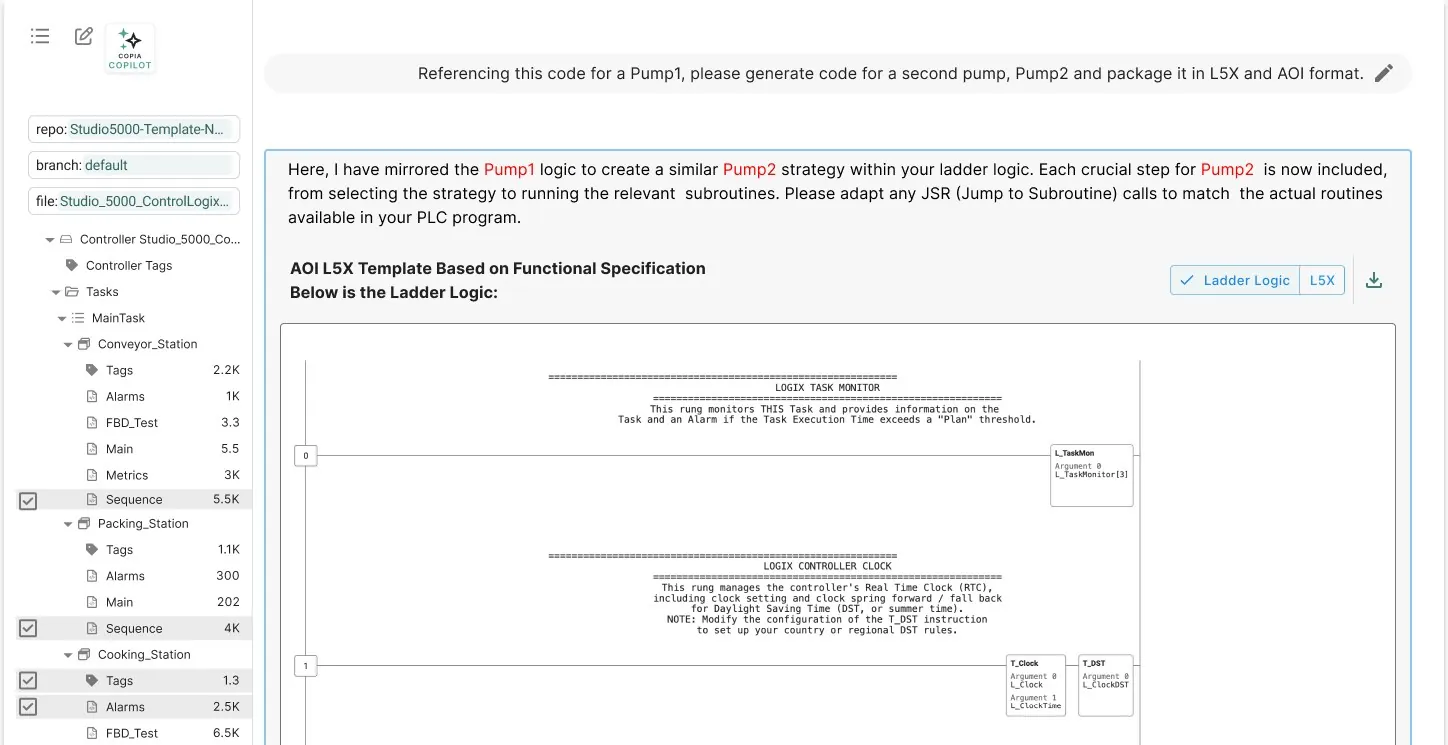
Factory code is often drawn, not written. Copilot reads it for you: it summarizes a file, explains what changed, drafts the commit message, and helps write better code.
The machines on a factory floor run on graphical languages like ladder logic: rows of contacts and coils, read rung by rung. Big programs are hard to read and harder to review.
Summarizes a file, explains what changed, drafts the commit message, and helps write and improve code.
Controls engineers who know their machines deeply, and are new to having an AI read their code.
02A bold bet, rewound
Dream big, then start with one file
The dream: AI that lives where engineers work and catches problems early. We rewound it to one assistant for one kind of file.
Copilot began as our co-founder's idea. I thought it through, and stretched it into where AI could go across Copia: AI that lives where engineers already work and catches problems before they happen. We rewound it to one assistant, for one kind of file, that engineers could poke at and correct.
In a factory, a wrong answer can cost a shift. Trust had to be earned one answer at a time, so the first version had to be easy to question, easy to correct, and easy to walk away from.
03Start small
One vendor first, then earn the next
We launched with one vendor's files, Rockwell Studio 5000, and grew only once the feedback was good.
We launched with Rockwell Studio 5000 files, the kind most of our customers' code is written in. We grew to more file types only once the feedback on answers was good.
- ReadSummarize a file, or explain what changed between two versions
- WriteDraft a commit message, or new code from existing code
- ImproveSpot what could be cleaner, safer or easier to maintain
04Trust
Trust starts before the first answer
Before Copilot opens, people choose whether we may learn from their data. Saying no still lets them use it.
A factory's code is its secret recipe. So before Copilot opens, people choose whether we may learn from their data, in plain words. Saying no still lets them use Copilot.
Yes and no carry the same weight, and no doesn't lock anything away. Most customers said yes.
The early worries were about the quality of answers, not the design around them. That told us where to focus.
05Question everything
The engineer always has the last word
Every answer can be accepted, edited, rejected or regenerated. And one engineer copying a rung ID by hand became rung-level asks and copy.
People summarize a file, then keep asking. Every answer can be accepted, edited, rejected or regenerated. Try it on a drafted commit message.
Copilot drafted a commit message draft 1 of 3
Rebuilt for this page, with dummy code.
The habit that became a feature
In research, people asked to question one rung, not the whole file. Then, in one session, I watched an engineer copy a rung ID by hand to paste into their IDE. I asked why, and what they did next.
That day I mocked up a "copy" button in Figma and showed it to them. It solved their problem. That became rung-level asks and rung-level copy.
People trust AI more when they can aim it at exactly what they're looking at, and take the answer straight back to their own tools.
06A listening loop
Every answer is a chance to learn
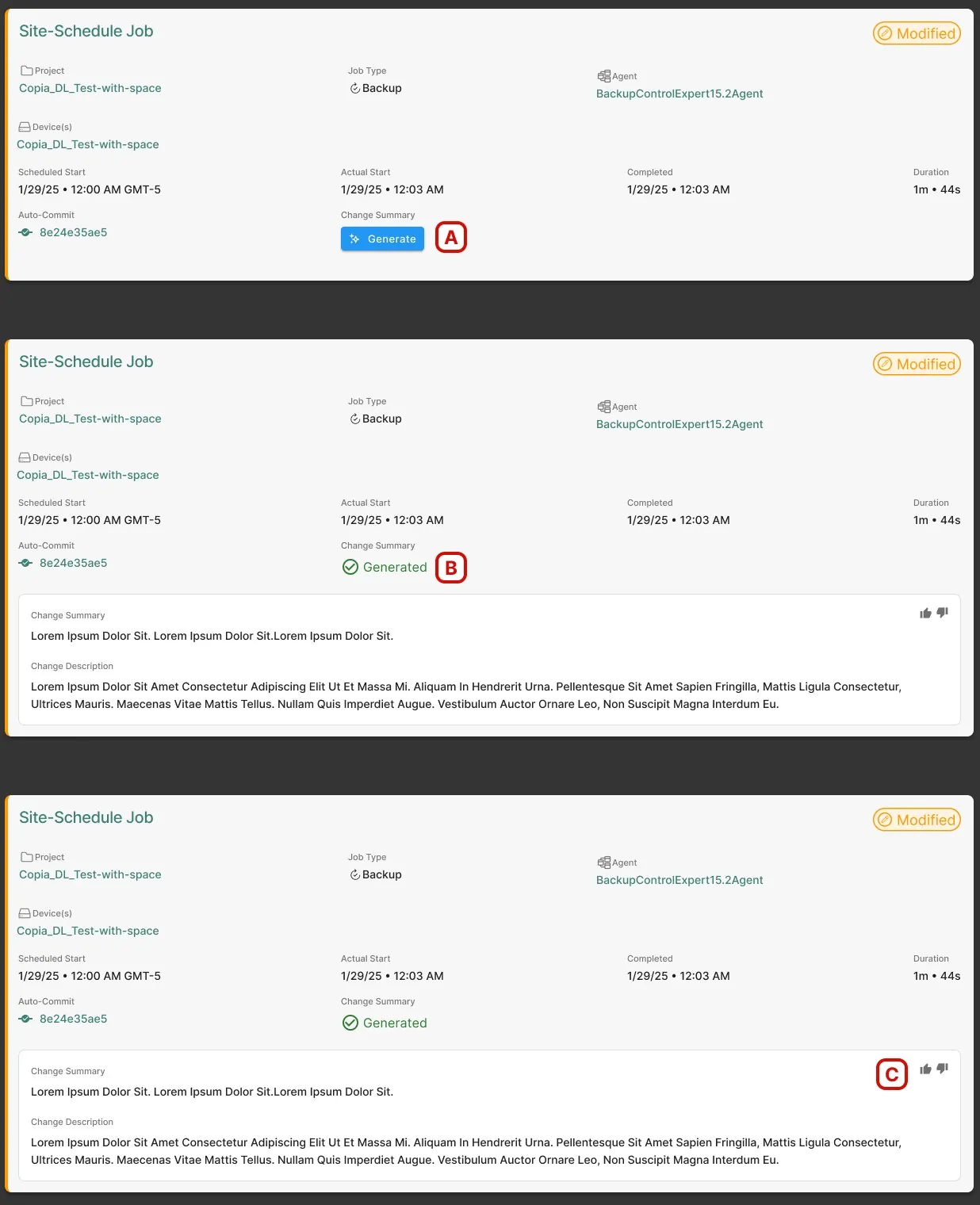
Thumbs up and down, whether people keep asking or come back, and how good their questions are. Feedback prompts come at the right moment, not every moment.
We judge Copilot by what people do, not just what they say.
- SignalsThumbs up and down, whether people close the chat or keep asking, and whether they come back
- PromptsHow good people's questions are, so we can help them ask better ones
- PeopleCustomer success stays close, and engineers hear from customers directly
Asking for feedback is a design problem too. "Tell us about this response" shows up at the right moment, not after every answer.
07Built forward
My north star: AI that meets engineers where they are
My north star, not a roadmap: ask about the file you're in, build templates from a file, find anything from one search, and get a heads-up before a line stops.
Copilot was the first step. This is my vision for where AI could go next, not Copia's roadmap.
Ask about the file or the change you're looking at, right where you're looking at it.
Turn a file into a template you can tweak and reuse: the hardest part of the work, made easier.
Find any device, agent or file from one place, by asking in plain words.
Spot problems before they stop a line, and tell the engineer early. Almost like observability for factory code.
Visions, not promises. The human stays in the loop for anything that could change a running machine.